Key Takeaways
Your Booking.com score improves fastest when you fix the stay problems that keep pulling ratings down.
Many hotels chase volume and ask for more reviews, yet the Booking.com hotel score moves when daily service gets more reliable. Guests score what they actually felt during the stay, and the same friction points will keep dragging your average down until you remove them. A stronger score supports better visibility on the platform, lowers rate resistance, and gives future guests more confidence before they book. If you want to improve your Booking.com review score hotel-wide, focus on repeatable fixes first, then make sure your public replies reinforce the same strengths.
Your Booking.com score follows guest experience patterns
Booking.com scores reflect repeated guest experience patterns. They rarely shift because of a single unlucky review. One weak step in the stay will surface again and again. Your score rises when that fault stops recurring.
A property with kind staff and attractive rooms can still sit at 7.8 if guests keep facing slow check-in, weak Wi-Fi, or noisy corridors. Those comments often sit inside different review texts, yet they describe the same operational fault. Once you group feedback by stage of stay, the real score drivers become easier to spot. That gives your team a workable starting point.
You’ll usually find that three or four repeated issues explain most of the gap between your current average and your target. That is why score improvement needs weekly review reading, clear ownership, and follow-up after each fix. More reviews help only when the stay earns better numbers first. If the stay stays inconsistent, the average won’t move far.
“More reviews help only when the stay earns better numbers first.”
8 Ways to lift your Booking.com hotel score
The fastest gains come from fixes guests notice straight away. These eight actions target the moments that shape ratings most. Each one addresses a repeat source of friction. Used together, they improve the stay and strengthen how future guests read your reviews.
1. Find recurring low score triggers in review language
Recurring phrases in guest reviews show where your Booking.com score is slipping. They point to one broken step in the stay. That step will keep hurting ratings until it’s fixed. More review volume won’t solve it.
Guests describe the same problem in different words. A tired room, marked grout, and dated curtains all point to upkeep. Breakfast queue complaints and lift delays work the same way. The wording shifts, but the fault stays consistent.
Sort comments by theme, shift, and room type each week. You’ll turn vague sentiment into a repair list. Your team can then assign ownership fast. That is where score recovery starts.
2. Match your listing promises to the actual stay
Score drops often begin before arrival. Guests react badly when the Booking.com page promises more than the stay delivers. That gap shapes value perception immediately. If expectations run ahead of reality, ratings will fall.
A listing that highlights quiet rooms, premium coffee, or easy parking sets a clear expectation. If the hotel sits on a lively street, uses basic in-room coffee, or has limited spaces, guests feel misled. The room itself can still be clean and comfortable. The score still drops because trust has already been dented.
Check every photo, room description, and amenity line against current reality. Remove old images and clarify renovation status. Tighten wording around room size, views, and access. Accurate positioning protects value perception before the guest even arrives.
3. Make arrival feel simple from booking to room key
Arrival shapes the tone of the whole stay. Guests carry that first feeling into the rest of the visit. Confusion or delay at this stage pulls scores down quickly. A smooth arrival gives the hotel early credit.
Small friction points create strong reactions. A guest who cannot find the entrance, waits fifteen minutes to check in, and gets unclear breakfast times starts the stay irritated. Another guest reaches a prepared room in four minutes and gets clear parking and Wi-Fi details. Those two guests will review the same building very differently.
You can improve this stage with better pre-arrival messages, queue planning at peak times, and a tighter desk script. Check that room keys, payment issues, and local directions are handled cleanly. Guests can forgive a small room more easily than a messy arrival. That is why the first ten minutes matter so much.
4. Protect cleanliness consistency with visible daily quality checks
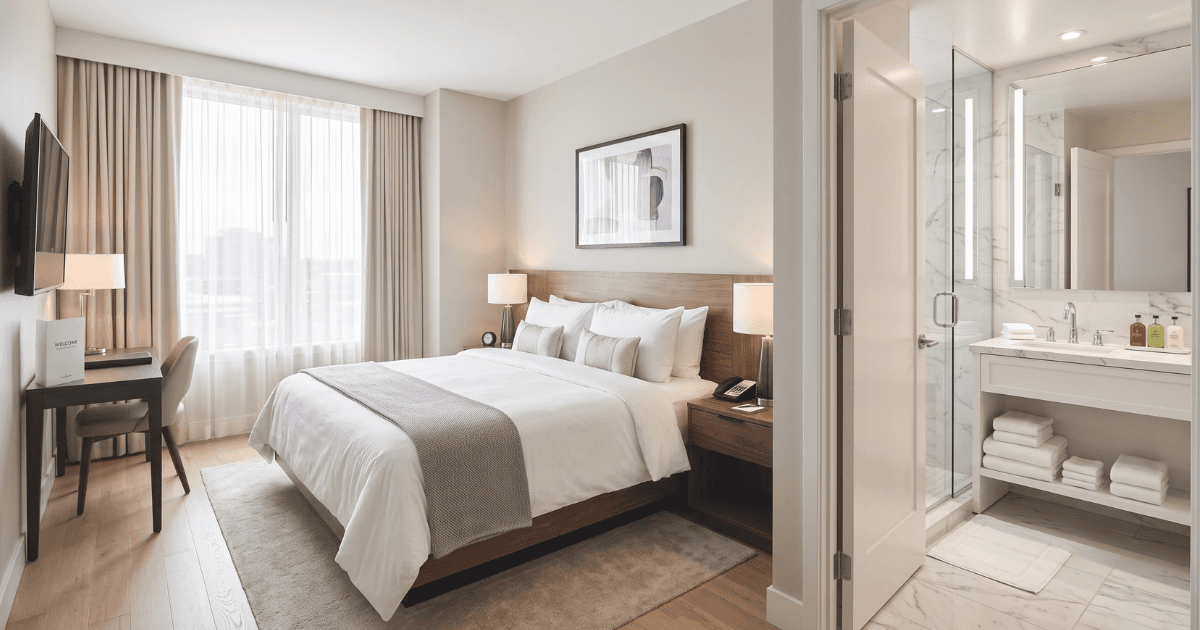
Cleanliness lifts or hurts a Booking.com score very quickly. Guests notice failures straight away. They also assume one visible fault signals a wider standards problem. Consistency matters more than occasional deep cleaning.
A single hair in the bathroom, dust on the bedside lamp, or a marked duvet cover can outweigh a well-designed room. Guests read those details as proof that standards slip behind the scenes. Public areas send the same signal. A clean lobby means less if the lift buttons and corridor skirting look neglected.
Set a daily spot-check routine for rooms released by housekeeping, and include toilets, lifts, and corridor touchpoints. One property will find that late check-outs compress room turnaround and cause rushed finishing. Another will spot linen handling issues on one floor only. That level of detail is what lifts scores in a lasting way.
5. Align room rates with the value guests receive
Guests accept limits more easily when the price feels fair. They score harshly when the rate and the delivered value feel out of line. This is why value comments deserve as much attention as service complaints. Price shapes the entire review frame.
A compact city hotel can still earn strong ratings with small rooms if the price, design, cleanliness, and service feel coherent. Problems start when peak dates push rates high without enough visible value to support them. The same room that scores 9.0 at €149 can attract a much colder review at €249. Nothing in the room changed, yet the guest’s judgement did.
Review comments about value should sit next to ADR decisions, room condition, and included benefits. If guests resist your rate on specific dates or room types, add clarity or improve the package. You don’t always need to drop price. You do need a stronger reason for the rate.
“Public replies should read like operational follow-through and genuine care.”
6. Recover service issues before guests reach checkout
Fast recovery stops disappointment from becoming a public score penalty. Guests usually accept a problem when they feel heard and see action quickly. Delay is what turns irritation into a low rating. Once checkout arrives, the chance to recover trust is much smaller.
A blocked shower drain reported at 18:00 should trigger an immediate fix, a room move, or a clear follow-up. If nothing happens until the next morning, the review is already taking shape. The same pattern applies to noisy neighbours, broken air conditioning, or missing cots for family arrivals. Slow follow-up tells guests the issue was not important.
Front office, housekeeping, and maintenance need one simple rule. Log the issue, confirm ownership, and close the loop with the guest before bedtime if you can. Guests won’t expect perfection, but they will expect care. Hotels that treat recovery as a same-day discipline usually protect their average much better.
7. Respond to reviews with details future guests can trust
Review responses will not erase a low rating, but they shape how future guests read it. Specific replies show that your hotel listens, fixes problems, and understands its own strengths. Generic replies do none of that. Public responses still need operational substance.
A vague thank-you reply adds very little. A stronger response acknowledges the exact issue, notes the corrective step, and reinforces a relevant property detail such as quieter courtyard rooms or a revised breakfast flow. That gives readers useful context. It also shows that the hotel is paying attention.
Hotel Speaker helps teams keep that standard because replies are built around hotel-specific facts and checked by people before posting. You’re showing future guests how the property thinks and acts, not just how it apologises. That matters when you want responses to support review score improvement. Public replies should read like operational follow-through and genuine care.
8. Turn review trends into weekly team coaching actions
Booking.com score improvement stalls when feedback stays trapped in reports. Scores rise when review themes become short, repeated coaching points for the people who own the guest journey. That keeps the feedback useful. It also makes improvement visible across shifts.
One week will show repeated comments about slow coffee replenishment at breakfast. Another week will show that evening arrivals struggle with parking instructions. Those are coachable issues. A ten-minute shift briefing with one behaviour change is far more useful than a monthly meeting packed with old complaints.
Link each trend to a named owner, a time frame, and a simple success check. When teams can see that guest language changes after a fix, review management feels practical instead of distant. Staff then understand what good execution looks like. That feedback loop is one of the clearest ways to increase hotel rating on Booking.com.
Action | Main point |
|---|---|
1. Find recurring low score triggers in review language | Repeated complaint patterns reveal the fixes that will move your average fastest. |
2. Match your listing promises to the actual stay | Accurate expectations protect trust and reduce avoidable disappointment. |
3. Make arrival feel simple from booking to room key | Smooth first contact lifts mood and supports better overall ratings. |
4. Protect cleanliness consistency with visible daily quality checks | Guests notice small cleanliness faults immediately and score them harshly. |
5. Align room rates with the value guests receive | Price feels fair when benefits, condition, and service line up clearly. |
6. Recover service issues before guests reach checkout | Quick action stops minor problems from becoming public score damage. |
7. Respond to reviews with details future guests can trust | Specific replies help readers see accountability and useful context. |
8. Turn review trends into weekly team coaching actions | Short coaching cycles help staff fix repeat issues before they spread. |
How to prioritise fixes when your Booking.com score stalls
When your score stalls, fix the pain points guests feel first. Arrival friction, visible cleanliness faults, and unresolved complaints pull ratings down fastest. Repeated value complaints deserve quick review as well. Public replies should then reflect the same fixes with plain detail.
Fix the issue theme that appears most often across recent reviews.
Address arrival delays before less visible back-of-house friction.
Correct any cleanliness fault that guests can spot in seconds.
Resolve open complaints before guests leave the property.
Keep review replies aligned with the changes your team has already made.
A stalled score rarely needs a grand recovery plan. It needs sequence, ownership, and follow-up that your team can keep doing every week. Hotel Speaker fits that rhythm because responses stay tied to actual property context and human review, so the public message matches the work on the floor. Over time, steady habits will lift ratings more reliably than another burst of review chasing.
